
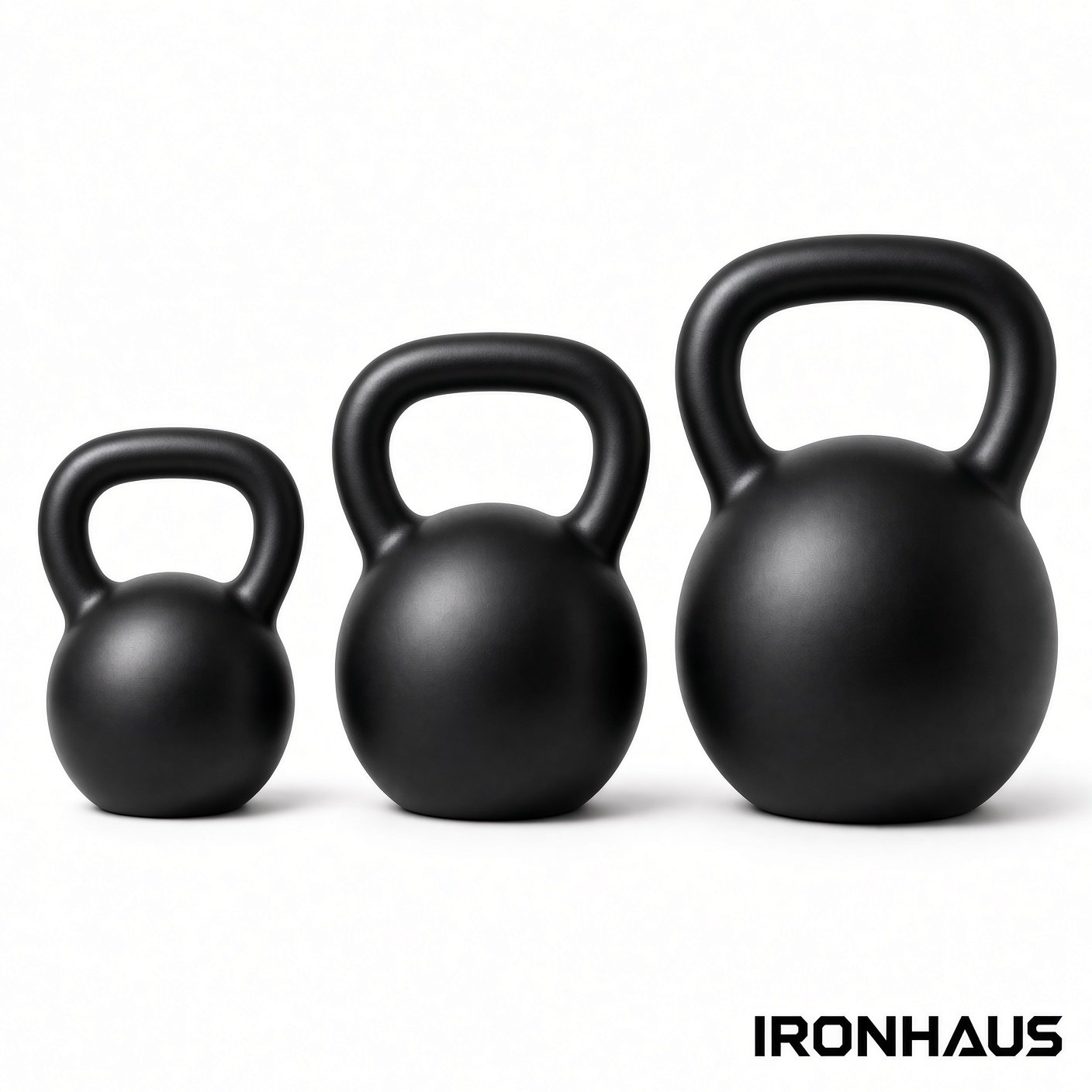
Description
Cast in one piece, for a reason
A kettlebell is a handle you swing at speed with a mass on the end. The join between handle and bell is the only thing between that mass and your kitchen window. Cheaper bells are cast in two parts and welded, or worse, are a hollow shell filled with sand. These are gravity cast as a single piece of iron, which is how competition bells are made and the only construction we will sell.
Why the finish matters more than the weight
Powder coat is the sweet spot between bare iron, which rusts and stains, and vinyl or rubber, which is slippery the moment your hands are damp. A matte powder coat gives chalk something to hold onto while staying smooth enough that high-rep snatches will not tear a callus off. If you have used a bell that felt like sandpaper, that was raw cast iron with a rough seam.
Picking your starting weights
The trio is built around the most common progression: 18 lb for getups, presses and single-arm work; 26 lb as the everyday swing bell for most people; 35 lb for two-hand swings and deadlifts once your hinge is solid. If you already swing above 35 lb, buy the 35 as your press bell and add a heavier single rather than repeating the set.
Reviews
There are no reviews yet.