
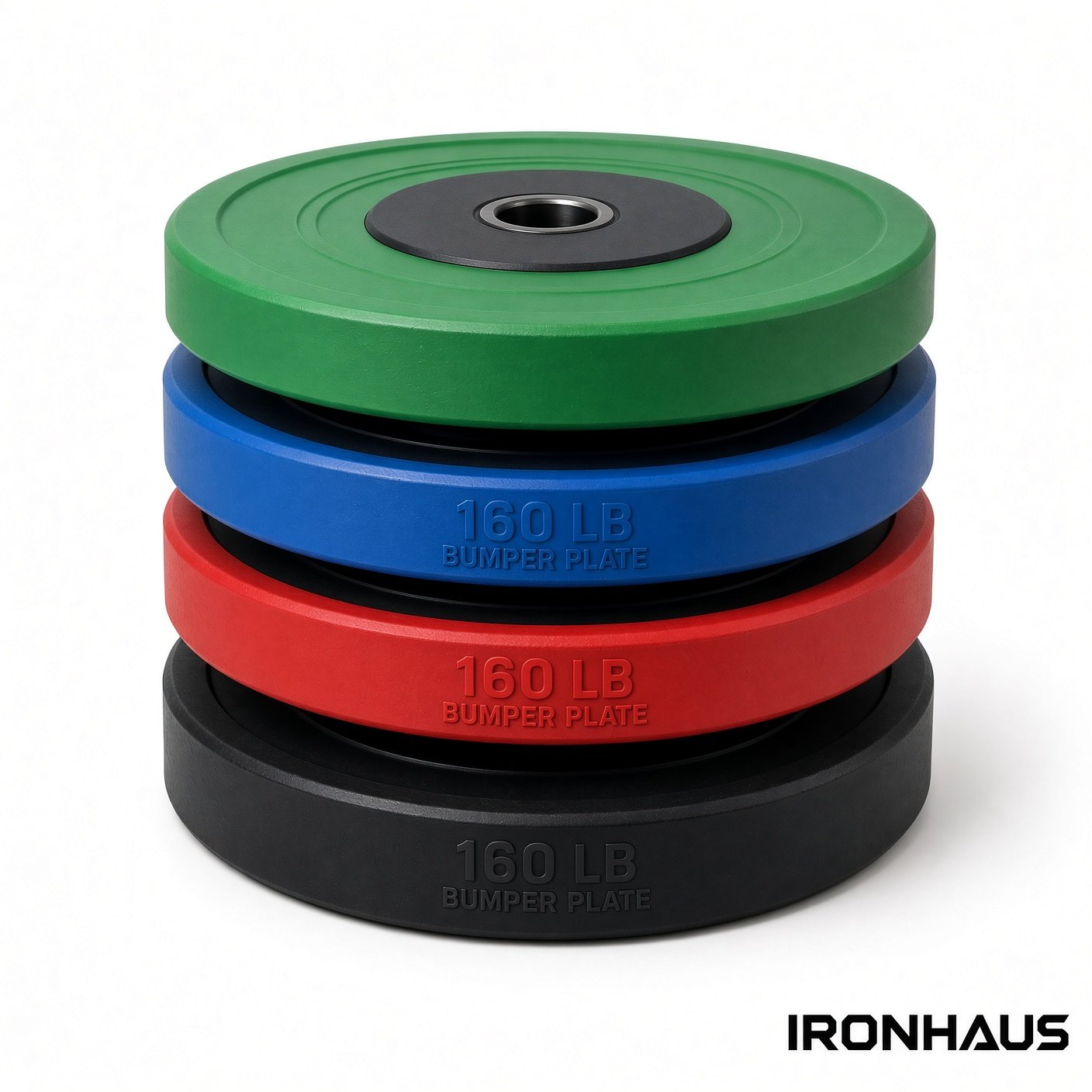
Description
Urethane versus rubber, honestly
Almost every bumper plate under $400 is crumb rubber — recycled tyre, bound and moulded. It works, it is cheap, and it has two problems in a home gym: it is thick, so a 300 lb load runs out of sleeve, and it outgasses. That smell in a closed garage or a spare bedroom is the binder, and it does not fully go away. Urethane is a virgin polymer. It is denser, so the plates are noticeably thinner per pound, it does not smell, and it holds its edge instead of chunking. It also costs more to make, which is the entire reason it is less common.
What the numbers mean
88 Shore A is a deliberately firm durometer. Softer plates bounce, and a bouncing barbell in a room with walls is a genuine hazard. ± 1% tolerance means a 45 lb plate weighs between 44.55 and 45.45 lb; that is well inside what matters for training and well outside what you would accept for competition, where you would want ± 10 g calibrated steel.
What 160 lb gets you
With a 45 lb bar this set loads to 205 lb. That covers the working range of most people training at home for the first two to three years. Add a pair of 45s when your deadlift passes 225 — not before, because plates are the single least efficient thing to over-buy.
Reviews
There are no reviews yet.