
Description
When stands beat a rack
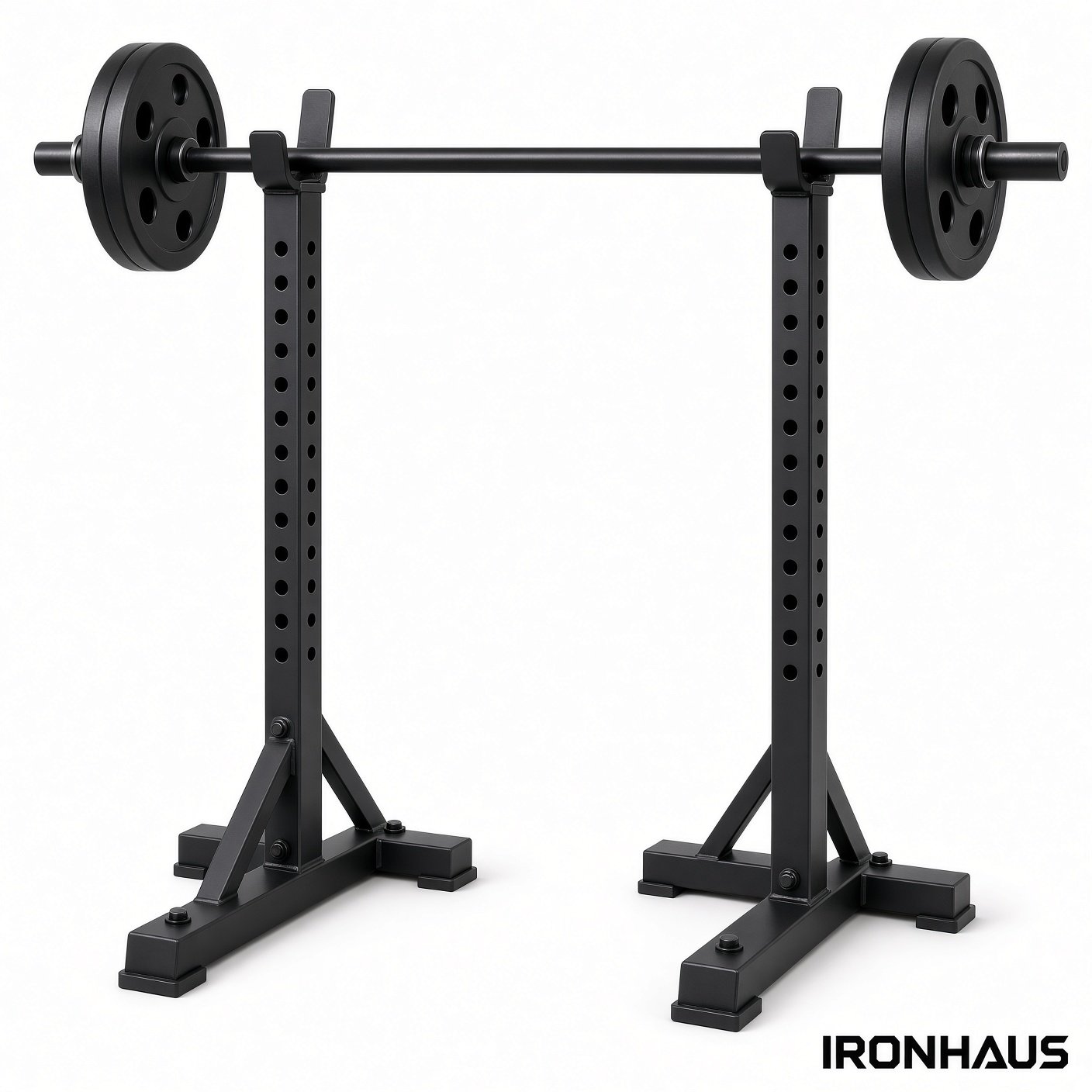
If you cannot drill into a wall, or you expect to move within a couple of years, independent stands are the honest answer. They set up in under a minute, store against a wall, and at 37 lb each one person can carry them one at a time. The trade is real and worth stating: there are no safety arms, so you must be able to bail a failed squat safely, and you should train well short of a true limit when alone.
Why the base depth matters
A 30″ base is what stops a stand tipping toward you when you rack a bar slightly off-centre — which everybody does, on the last rep, when they are tired. Stands with 20″ bases exist and they are noticeably twitchy under a loaded bar. Rubber feet are not a nicety either; they are what keeps the stand from walking across a garage floor between sets.
Setting them up
Set your J-cups roughly at mid-chest, not shoulder height — you want to walk the bar out, not press it out. Then set the two stands using the numbered holes rather than by eye, and check them each session. Two stands drifting a hole apart is the single most common cause of an awkward unrack.
Reviews
There are no reviews yet.