
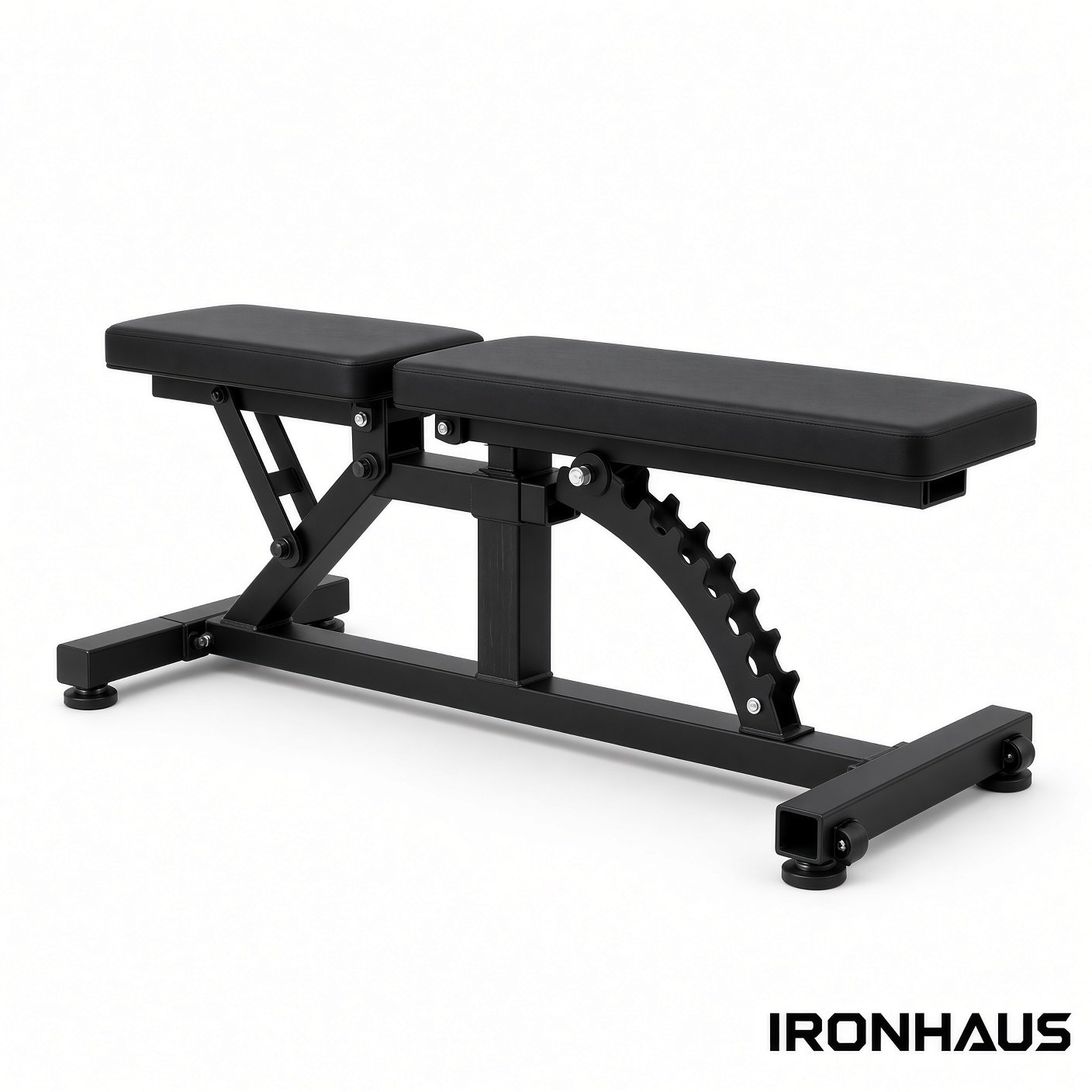
Description
The gap is the spec nobody lists
On a three-piece adjustable bench there is a gap between the seat pad and the back pad. On cheap benches that gap is four inches or more and it sits exactly under your lumbar spine when you press. You will feel it on your third set. The B7’s gap is 2.5″, which is at the good end of what a hinged bench can achieve without going to a single-pad design that cannot decline.
Pad height, and why 17″ is the number
17″ is the competition flat-bench height. It exists so that a person of average leg length can plant their feet with shins vertical. Benches at 19–20″ — common when a manufacturer prioritises adjustment range — quietly force you onto your toes and cost you leg drive. If you are under about 5’6″, 17″ is close to a requirement rather than a preference.
Stability over range
Seven back positions is plenty. Benches advertising twelve are usually adding positions at the expensive end of the arc where nobody trains, and each extra detent is another place for the mechanism to develop play. What you want instead is a ladder-style adjustment that engages positively and does not shift when you unrack.
Reviews
There are no reviews yet.